A train carriage, a sweeping boy & a radical promise
Mrs. Inderjit Khurana, the Founder of Ruchika Social Service Organisation, once asked a little boy who was sweeping the floor in her train carriage. “My father is dead and my mother can’t manage without my help,” the boy explained. Inderjit knew that many people tried to help poor children in India. But that help didn't reach the poorest children at the station. They have to follow the train schedules to survive. In rush hour, and when the large express trains come in, the stations fill up with people. And that's when there's money to be earned.
Inderjit thought, all children have a right to education, but how can these children get to go to school? She could only think of one solution: “If the children can’t come to the school, we have to bring the school to them. I have to open a school at the station!” That was the commitment which made Inderjit create Ruchika group of Institutions. A world's leading social entrepreneur, she championed innovative new ideas that transformed the lives of thousands of underprivileged children in India.
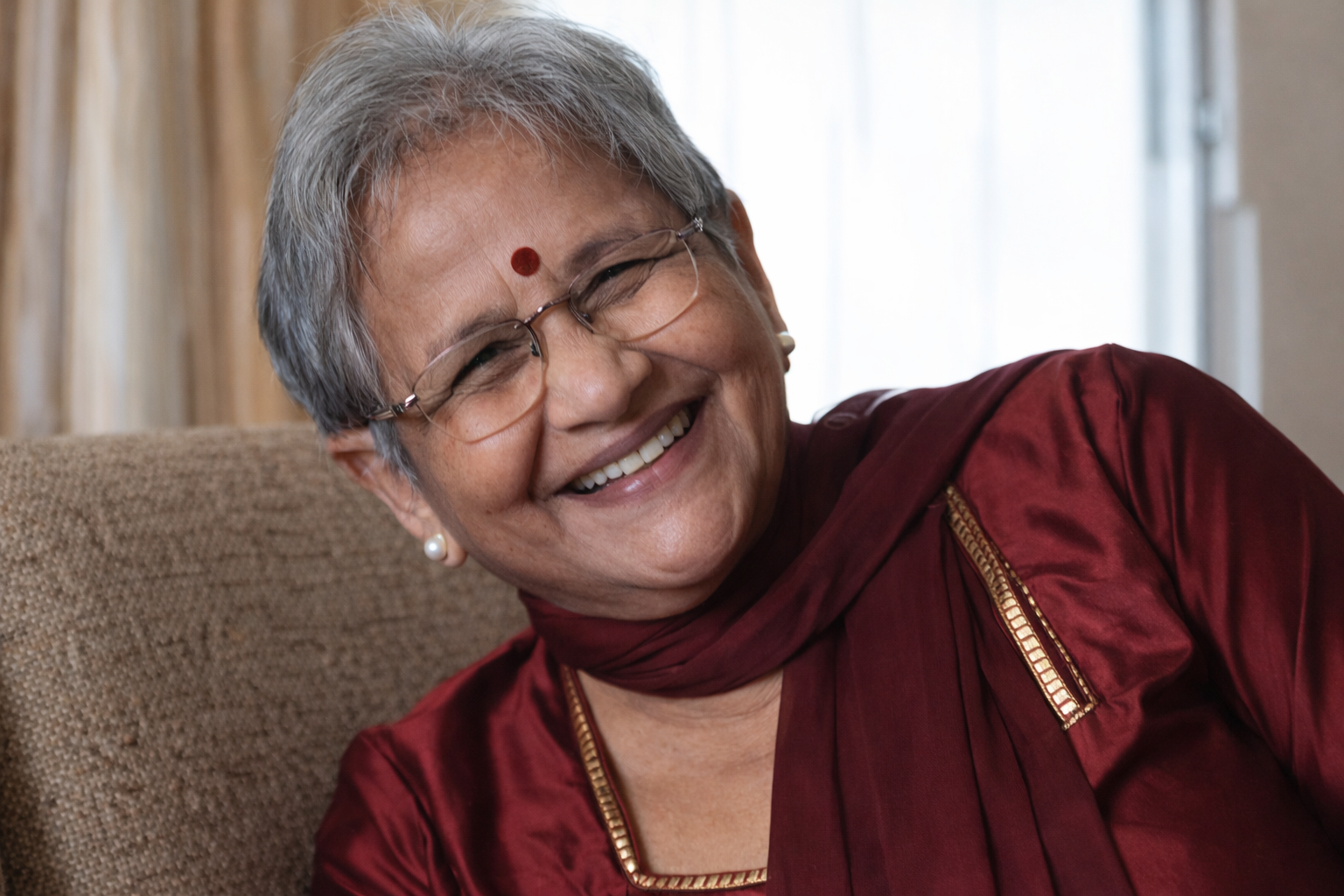
She was a treasure beyond compare – a true blessing to this world and her presence is sorely missed – not just by the wonderful organization that she left as her legacy, but by the world at large. She was a remarkable woman: determined yet gentle; learned yet always learning; a visionary yet completely down to earth. She epitomized what is noble and devoted her life in the service of the downtrodden and poor children for more than 25 years. She was a globally celebrated social entrepreneur and a driving force behind her incredible organizations.
Early life & schooling
Born in Lucknow, on 24th November 1936, brought up and educated in Jamshedpur. Eldest of five daughters of Mr. Manohar Singh Dua and Mrs. Gajindar Kaur. She schooled in the Sacred Heart Convent from where she completed Matric. Then enrolled in Isabella Thoburn College, Lucknow, graduating with History Honours in 1956.
Swimming trainer for beginners in college; participated in Inter-University youth festival in New Delhi.Higher studies & research
Married Engineer Surinder Singh Khurana, an Army Officer, in 1956. While travelling, she was actively involved with Army Wives Welfare Association, worked as a teacher and studied for teaching diploma in Early Childhood and Primary Education (completed 1964). In 1971 she finished her post graduate degree in History from Punjab University, Chandigarh. Worked as a researcher assistant for a UGC project on Modern Indian History (1757-1947) and completed her thesis in 1974. Blessed with two sons: Anoop Singh Khurana and Gurpreet Singh Khurana.
From cow herds to railway platforms – pioneering preschool movement in Odisha
While on a construction site in Balasore and later in Barkot she experimented with play way education with the cow herds and rural children — which became her inspiration for experimenting with the same method on the railway station in 1985.
She started the First pre-school center in Bhubaneswar with only two children in February 1978, which initiated the great Pre-School Movement in Odisha. Her Pre-School gradually developed into a High School by 1998. She named her school as Ruchika which means Aesthetic. Supported morally and technically by eminent educationists like Sri Hari Hara Mishra, Prof. Satrughna Nath and Sri Indu Bhusan Mishra, she pioneered preschool education in Odisha. With these above educationists she founded Indian Association for Preschool Education in Orissa and at one time she was the Secretary of the association.
Her intuitive desire to reach out to impoverished children compelled her to start working with the children on railway platform. In response to the growing and seemingly insurmountable challenges faced by the children of Bhubaneswar slums and railway station, she founded the Ruchika Social Service wing in 1985 which was registered as Ruchika Social Service Organisation in 1998.
Inderjit envisaged a world without child beggar and child labour without exploitation and abuse. To give effect to her convictions she started this program of Platform school for child beggars and vagrants in Bhubaneswar railway station on 7th April 1985.
At the same time when running a play school for the affluent children, she observed that a number of vagrant children surrounded the school gate and enjoyed watching the children in the school singing and playing with their teachers.
With a commitment to help these children she started a play centre at the railway station. Her aim was to imbue their deprived childhood with some joy and fun. She went to the platform with a handful of picture books, color pencils and some play materials on every Sunday and then Every day. She was doing many fun filled activities with them telling stories, singing song and drawing with color pencils. To create musical sounds they were using materials in the environment which had musical sounds like long seed cover of gulmohar tree was as maracas, marbles in a tin box created sound, caps of cold drink bottled to make tambourines.
Gradually the children demanded a study centre because they were enjoying their hours in the centre. The study started with the sight reading cards flashed all over the station, distribution of underlined letters cards on the sign boards they felt confident to read. Train routes were used to teach History and Geography and train schedules for time reading, wagon wheels for counting. Since then the overwhelming credo, “if the child cannot come to the school then the school must go to the child” guided the organization.
First of her many innovations was creation of patterns of writing. She used the children’s immediate environment and experience as the datum for their studies. Common objects in the children’s environment were used to establish letters, names, words and hence the path of literacy. Learning from her initiative and experience in this field even government agencies have revised their text books to incorporate these patterns.
Started with 11 children and one teacher on the first day, the organization is now reaching out to over 15000 streets, slum and railway children and children in need with more than 250 social workers to transform their lives through innovative programs. This remarkable growth stands as a testament to her vision and dedication.
Dismayed by child beggars
She was dismayed to watch the child beggars on the railway station raising their little hands...
Play & joy at the station
At the same time, when running a play school for affluent children, she observed vagrant children...
📖 Learning from the environment: Gradually the children demanded a study centre. Sight reading cards flashed all over the station, underlined letters on sign boards – they felt confident to read. Train routes were used to teach History and Geography, train schedules for time reading, wagon wheels for counting. The credo “if the child cannot come to the school then the school must go to the child” guided the organization.
✨ First of her many innovations: creation of patterns of writing, using children’s immediate environment as datum for studies. Common objects in children’s environment were used to establish letters, names, words — the path of literacy. Learning from her initiative, even government agencies revised their textbooks to incorporate these patterns.
Started with 11 children and one teacher
Now reaching over 15,000 street, slum and railway children & children in need
With more than 250 social workers, transforming lives through innovative programs. Mrs. Inderjit Khurana’s vision created a movement that continues to grow, guided by compassion and the unwavering belief that every child deserves a safe, fulfilling life.
“A visionary yet completely down to earth — she devoted her life in the service of the downtrodden for more than 25 years.”